In this article
If a POS company has offered you free terminals lately, you are not imagining it. Toast and Square have been handing out hardware to win new merchants, and the discounting has gotten aggressive enough that Wall Street analysts are writing notes about it. Payments Dive covered the trend this week, and the line that stuck with me came from payments consultant Ken Musante, who described the model as giving away the razor and charging for the blade.
Free hardware sounds like found money. The part worth understanding before you sign is where the company earns it back, because the answer is usually your processing rate, a multi-year contract, or both.
Where the free hardware gets paid back
The same Payments Dive piece quotes a Robert W. Baird analyst who put it plainly: get a merchant onto the platform with discounted hardware, and now they are ingrained in your software. A terminal is a one-time cost of a few hundred dollars. Your processing rate is a cost you pay on every sale for as long as you keep the account. Vendors are glad to trade the first for the second, because the second never stops.
That trade works because the hardware savings is a clear number on day one, while the processing markup is a fraction of a percent spread across thousands of sales, so it hides.
Toast: the cheap terminal, the long contract
NerdWallet calls Toast "one of the most expensive options" among restaurant POS systems, and the pricing is why. The software runs $0 for the starter kit and $69 a month and up for the Point of Sale plan. The processing rate is where the free-hardware math turns. NerdWallet lists it at 2.49% + 15¢ for card-present sales if you pay for the hardware upfront, and 3.09% to 3.69% + 15¢ if you take the pay-as-you-go path that comes with cheaper or free equipment.
Run the numbers on a restaurant doing $50,000 a month in card sales. The gap between 2.49% and 3.09% is 0.6 of a percentage point, which on $50,000 is about $300 a month, or roughly $3,600 a year. The terminal you "saved" a few hundred dollars on gets paid back several times over in the first year, and you keep paying after that.
Then there is the contract. NerdWallet notes Toast locks you in for two to three years. Merchant Maverick adds that the contracts can run three years and renew automatically for another year, and that leaving early means an early-termination fee equal to the remaining software fees on your term. The free terminal comes attached to a bill you owe whether you stay or not. Calling Toast one of the most expensive ways to run a restaurant is Cloud9's read, but the numbers behind it are Toast's own published pricing and two independent reviews.
Square: a flat rate that does not shrink as you grow
Square works differently, and it advertises no long-term contract. That part is true. The cost shows up in the rate instead. Square's own pricing is a flat 2.6% + 15¢ on every in-person card sale on its free plan, with paid monthly plans that shave the percentage a little. Flat sounds simple, and it is, but a flat rate does not fall as your volume climbs the way interchange-plus pricing can. The bigger your business gets, the more a blended 2.6% costs you compared with paying actual interchange plus a fixed markup. Stack the hardware and software you buy on top, and "free terminal" is doing a lot of work.
The lease that will not die
This is the one that does the most damage, and it is older than either company. If a hardware offer routes you through a third-party leasing company instead of an outright purchase, read it twice. Equipment leases for card terminals are often written as non-cancellable. You sign, and you owe every payment for the full term no matter what, even if you close, switch processors, or the gear quits working.
This is not hypothetical. In 2020 the New York Attorney General won a case against Northern Leasing Systems, which the office said trapped small family-owned businesses such as "flower shops, hair salons, automotive repair shops, bodegas, delis, restaurants, and bars" into "overpriced, never-ending lease agreements for credit card processing equipment." The court ordered nearly 30,000 default judgments against out-of-state merchants vacated. The equipment in these deals is usually worth a few hundred dollars; the lease can cost thousands. A "free" offer that quietly turns into a four-year lease is the worst version of this.
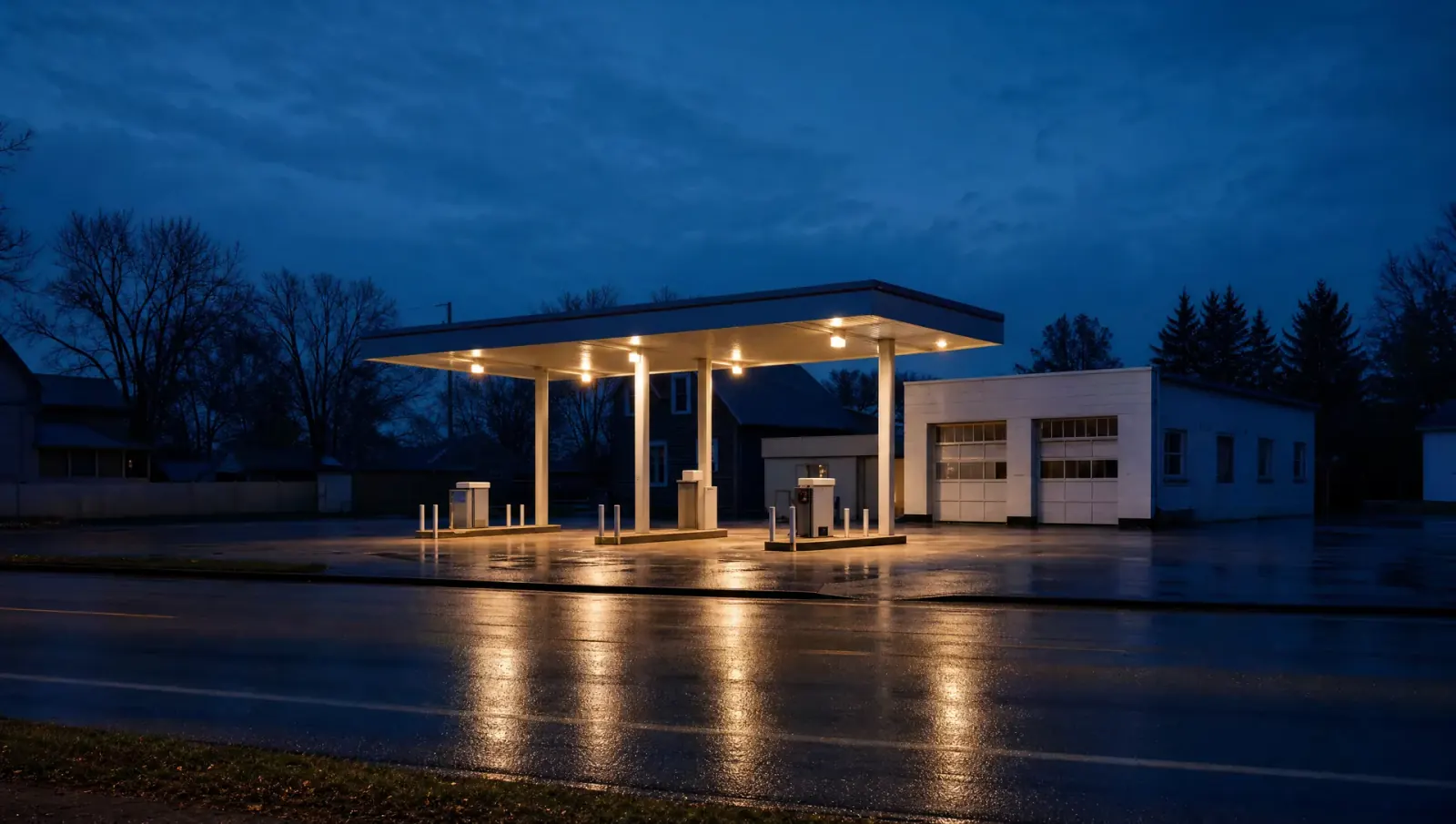
If you run a convenience store or gas station, the same caution applies to any new all-in-one system that bundles your pumps, your POS, and your processing into one agreement. The more a single vendor controls, the more there is to unwind if the deal sours.
Also this week: fewer customers, bigger tickets
Fiserv's Small Business Index for September put a number on something a lot of owners have been feeling. The index rose to 146, with small-business sales up 2.2% year over year, per Fiserv, as back-to-school spending lifted retail. Underneath the gain, shoppers kept making fewer trips and spending more on each one. When your transaction count is flat but your average ticket climbs, percentage-based processing fees quietly take a bigger bite, because the percent part rides on the larger sale. It is a quiet reason to check your effective rate heading into the fourth quarter.
What Ohio merchants should do now
- Ask for the processing cost over a full year at your real volume, in writing, not just the headline rate.
- Check the offer for a multi-year contract, an auto-renewal, and an early-termination fee before you sign.
- Find out whether the "free" hardware is a purchase or a lease, and whether that lease can be cancelled.
- Pull a recent statement and find your effective rate so you can compare the offer against what you already pay. Our guide to choosing a restaurant POS walks through the rest.
What Cloud 9 does instead
We set up and support Clover for restaurants and shops across Northeast Ohio, so we are not against good hardware. We are against paying for it twice. Cloud 9 Payments prices on transparent interchange-plus, so the cost of your equipment and the cost of your processing stay separate and visible instead of one hiding inside the other. There is no annual, PCI, or infrastructure surprise fee, the agreement is month-to-month, and support comes from here in Chagrin Falls. If you want to see how a local setup compares, our Cleveland restaurant POS rundown is a good place to start.
If you have a "free terminal" quote and want to know what it really costs over a year, send it and a recent statement through our contact form or call or text 1-855-297-6722. We will do the math on your actual numbers.
Figures are as of October 6, 2026, from the sources linked above. Processing rates, contract terms, and lease terms vary by business and provider. Nothing here is legal advice.